Exploring the Enigma of John DeLorean
You know, it's really fascinating when we look back at figures like John Zachary DeLorean. His story, to me, reads less like a typical executive biography and more like a Greek tragedy, filled with incredible highs and devastating lows. He was a man who challenged the automotive establishment, dreamt big, and ultimately saw his empire crumble. But for a fleeting moment, he gave us a car that captured imaginations worldwide.
I mean, think about it: he was this incredibly charismatic, stylish, and ambitious engineer who climbed the ranks of the staid General Motors, bringing innovation and a fresh perspective. Then he walked away from it all to chase an impossible dream. What I find so compelling is how his personal drive and ambition, which propelled him to such heights, also played a significant role in his dramatic fall.
His Early Career & GM Innovations
Born in Detroit in 1925, DeLorean grew up immersed in the world of automobiles. He wasn't just a gearhead; he was a smart guy, earning degrees in industrial engineering and later an MBA from the University of Michigan. His intelligence and restless energy quickly became apparent. After stints at Packard and Chrysler, he landed at Pontiac, a division of General Motors, in 1956. This is where, I'd argue, his legend really began to take shape.
At Pontiac, DeLorean wasn't content with the status quo. He understood what the younger generation wanted, and he wasn't afraid to push boundaries. His early work there led to significant improvements in Pontiac's existing models. But the real game-changer came in the mid-1960s with the Pontiac GTO. This car is often credited as the progenitor of the muscle car era. It was a brilliant move, essentially dropping a powerful V8 engine into a smaller, lighter car. Corporate wasn't thrilled initially, but DeLorean and his team pushed it through. The GTO became a massive success, and DeLorean, still in his 30s, became a rock star in the auto industry.
His star continued to rise. He was instrumental in developing other iconic Pontiacs, like the Firebird. By 1969, he became the youngest division head in GM history, taking over Pontiac, and then quickly moving to Chevrolet. He brought a touch of Hollywood to the Detroit boardroom, with his open-collar shirts and modern hairstyle, a stark contrast to the conservative executives around him. By 1972, he was promoted to head all of GM's North American automotive operations. He was at the pinnacle, a definite contender for the GM presidency. But that's when things started to get interesting, because John DeLorean was never one to follow the conventional path.
The Dream of DeLorean Motor Company (DMC)
Despite his meteoric rise, DeLorean grew increasingly disillusioned with the bureaucracy and slow pace of innovation at GM. He felt stifled. He craved the freedom to build a car exactly as he envisioned it – a safe, ethical, long-lasting sports car that prioritized both performance and responsibility. So, in a move that shocked everyone, he resigned from GM in 1973. It was unheard of for someone so close to the top to just… walk away.
His next chapter was the creation of the DeLorean Motor Company (DMC). This wasn't just about building a car; it was about building a legacy, a company that embodied his ideals. He managed to secure significant funding, including incentives from the British government to build his factory in Northern Ireland, a region desperately in need of jobs. It was a bold, some might say audacious, undertaking.
The Iconic DMC-12: A Car Ahead of Its Time?
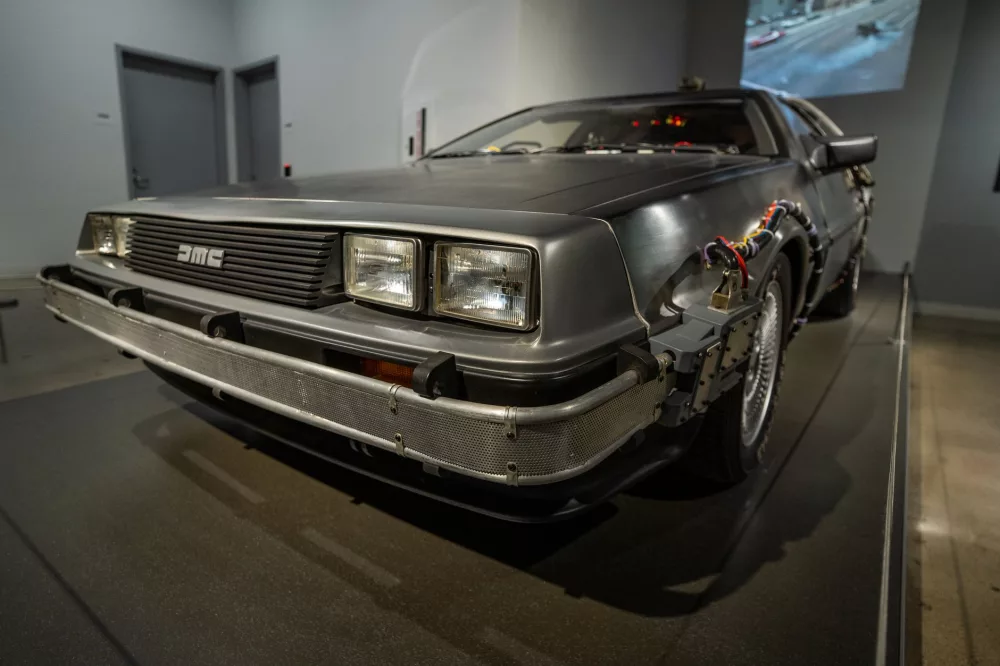
The car itself, the DMC-12, was undeniably unique. Designed by the legendary Giorgetto Giugiaro, it featured several distinctive elements:
- Stainless steel body panels: Untouched by paint, giving it a truly futuristic, raw metallic look.
- Gull-wing doors: A striking design choice that made it instantly recognizable.
- Rear-mounted engine: A 2.85-liter V6, developed in conjunction with Peugeot, Renault, and Volvo (the PRV engine).
- Emphasis on safety: DeLorean wanted a safe car, so it incorporated features like a strong chassis and impact-absorbing bumpers.
From an engineering perspective, the car faced numerous challenges. It was initially envisioned with an innovative plastic chassis, but that proved too complex, so they reverted to a more conventional steel backbone. Production issues, quality control problems, and financial mismanagement plagued the factory in Belfast. The car, when it finally hit the market in the early 1980s, didn't quite live up to the performance hype, and its initial price tag was quite high for the times.
Turbulence and Downfall
As the early 1980s unfolded, DMC was in deep financial trouble. Production was slow, sales weren't meeting targets, and the British government was threatening to pull its support. DeLorean was desperate. It was during this period of extreme stress and financial pressure that he became entangled in a truly bizarre and tragic situation. In October 1982, he was arrested in Los Angeles, accused of conspiring to traffic cocaine to save his ailing company.
This news sent shockwaves around the world. The dashing automotive executive, caught on tape discussing drug deals. It seemed like the definitive end of his dream. However, during the trial, DeLorean's defense team successfully argued that he had been a victim of entrapment by federal agents. The jury ultimately agreed, and he was acquitted of all charges in 1986. But by then, DMC was long gone, having entered receivership in 1982.
A Complex Legacy
Despite the acquittal, DeLorean's reputation was irrevocably damaged. He spent years trying to rebuild his life, dabbling in various ventures, none of which achieved the success of his early career. He patented a monorail system and even tried to launch a new car company focusing on ethical transportation, but it never came to fruition. He passed away in 2005 at the age of 80.
So, what do I make of John DeLorean? He was undoubtedly a visionary, a brilliant engineer who wasn't afraid to challenge giants. He had an incredible ability to inspire and charm. But he also had a hubris, a belief in his own invincibility that perhaps blinded him to the realities of building a complex business. The DMC-12, despite its flaws, achieved legendary status thanks to the 'Back to the Future' films, forever cementing its place in popular culture. It's a car that, for many, still represents that audacious dream. John DeLorean's story is a compelling reminder that the line between genius and madness, between ambition and downfall, can be incredibly thin.